
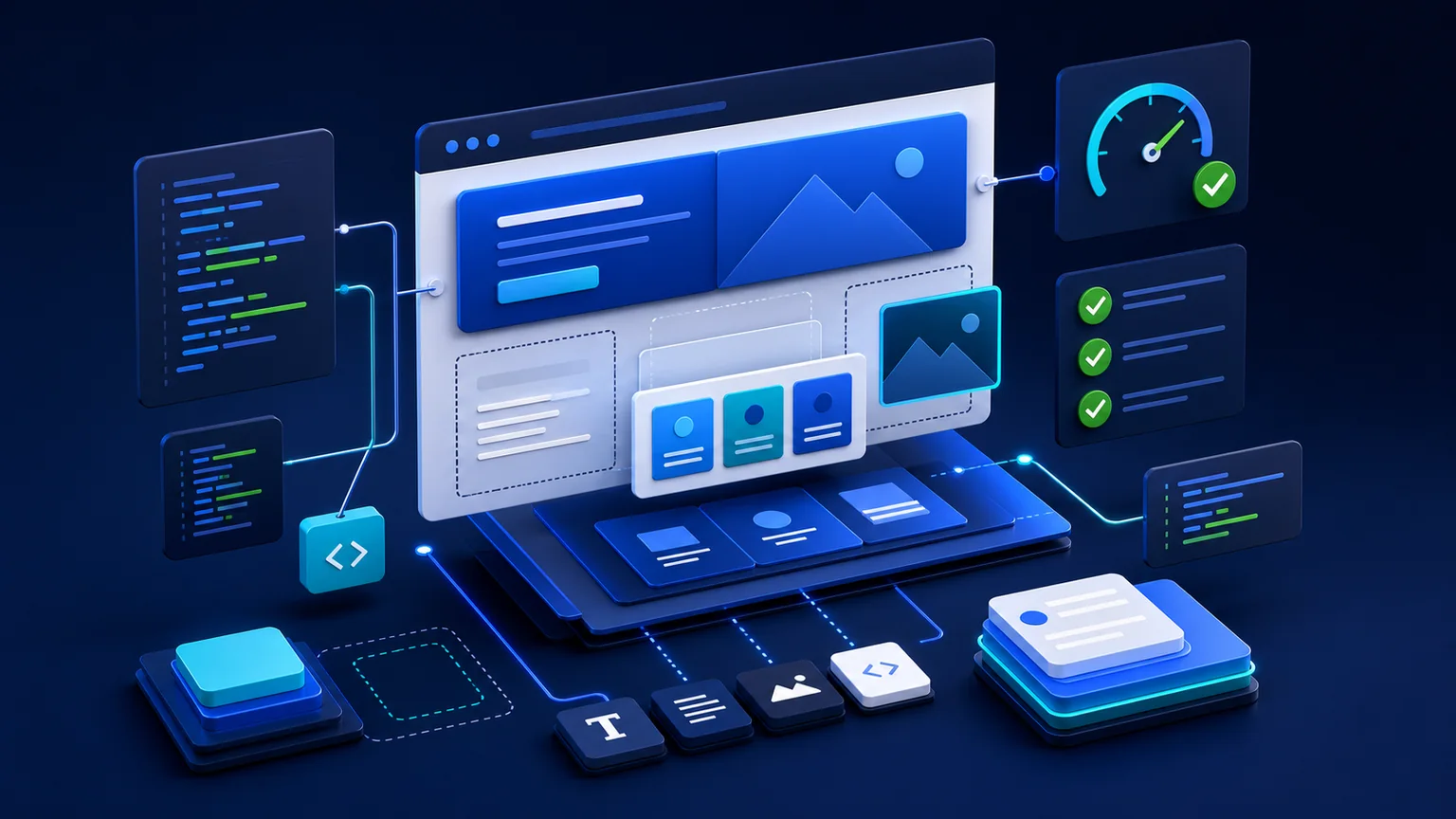
The build phase turns approved design and content into a working website that loads well, works on mobile and supports search visibility. This guide explains the phase in practical terms for businesses that want their website project to stay focused on visibility, credibility and enquiries.
Build is where the website becomes real, with clean components, responsive layouts, forms, metadata, images and technical foundations working together.
Build With The Plan In Mind
The build phase should follow the plan and design direction agreed earlier. This keeps the website focused and avoids unnecessary features being added because they seem interesting in the moment. The goal is a working website that supports the business, not a collection of disconnected effects.
A good build turns layouts into reusable sections, keeps navigation clear and makes important content easy to manage. It should respect the structure needed for Search Engine Optimization, the user journeys agreed in planning and the visual system created during design.
Make Responsive Layouts Reliable
Responsive development is where mobile, tablet and desktop layouts are tested properly. Text should not overflow, buttons should stay readable, cards should not jump awkwardly and forms should remain easy to complete. This work is practical, but it has a direct effect on enquiries.
Visitors do not separate build quality from business quality. If a website feels broken on mobile or difficult to use, confidence drops. A reliable responsive build helps the site feel professional in ordinary real-world conditions.
Keep Components Clean And Reusable
Reusable components make a website easier to expand. Service cards, FAQ accordions, CTA banners, guide layouts and process blocks should have consistent styling and sensible behaviour. This makes future additions easier and helps the website avoid becoming messy over time.
This is especially important for sites that will grow with new articles, location pages, case studies or campaign landing pages. A clean build gives the business more room to develop without needing to redesign every section from scratch.
Add Search And Performance Foundations
Build quality affects search visibility. Page titles, meta descriptions, heading structure, internal links, image alt text, crawlable links and fast-loading assets all matter. These foundations do not guarantee rankings, but they help the website start from a healthier position.
Performance also matters. Images should be compressed, unnecessary scripts avoided and layouts kept stable. The speed and performance guide explains why these choices affect trust and marketing results.
Check Forms, Links And Tracking
A website build is not finished when the page looks right. Forms need testing. Phone links and email links need checking. Navigation needs to work. Redirects may be needed. Analytics or conversion tracking should be discussed where it supports reporting and improvement.
Small technical issues can quietly damage enquiries. A broken form or unclear contact route can waste good traffic from search, referrals or social media campaigns. Build checks help catch those problems before launch.
What Kendall Digital Looks For
Kendall Digital focuses on clean, practical builds that support marketing rather than weighing the site down. The aim is to create pages that are easy to use, easy to understand and easier to improve after launch.
A strong build gives the launch phase confidence. It means the site has been constructed with real users, future content and digital visibility in mind, not just the first impression on one screen size.
Common Build Mistakes To Avoid
A common build mistake is adding too much weight to solve simple problems. Heavy scripts, unnecessary plugins and overcomplicated sections can make the website slower and harder to maintain. Another mistake is only testing on one screen size, which can leave mobile visitors with a weaker experience.
The build should also avoid treating Search Engine Optimization basics as optional. Metadata, headings, internal links, image descriptions and clean URLs are easier to handle while the site is being built than after it has already gone live.
How Build Quality Helps After Launch
A clean build makes future support easier. If sections are reusable and the structure is sensible, new pages can be added without breaking the design. If the code and content management are messy, even simple updates can become slow and frustrating.
Build quality also affects reporting and improvement. Forms, analytics, tracking and page speed checks need a stable technical base. When the build is tidy, it is easier to understand what is happening and make practical improvements over time.
Questions Worth Answering In The Build Phase
Useful build questions include: which pages need redirects, which forms need testing, which images need compressing, which content areas need to be editable, how should internal links work, and how will future pages be added?
It is also worth deciding what must be checked before launch. A simple launch checklist can include mobile checks, speed checks, form submissions, email notifications, phone links, analytics, metadata and privacy links.
How To Review Build Decisions
Build review should look beyond whether the page appears visually correct. It should check whether the website behaves properly across devices, whether images are loading in the right format, whether forms send to the right place and whether the content can be maintained sensibly after launch.
It should also check whether important pages have clear URLs, one clear H1, useful internal links and sensible metadata. These details are easy to miss when the focus is only on appearance, but they matter for visibility, usability and future improvement. This is also the point where accessibility basics, keyboard focus, readable contrast and clear link text should be checked so the website is easier for more people to use.
Why Build Discipline Matters
Build discipline is what keeps a website useful once more pages, guides and campaigns are added. It helps the site stay fast, consistent and easier to edit, instead of slowly becoming harder to manage. That discipline is especially important for growing businesses that expect the website to support more services, stronger content and future marketing activity.